
Shrewsbury City Directory Holdings
There is no single complete run of Shrewsbury directory holdings. The most specific catalog lead is the Massachusetts State Library holdings list, which identifies intermittent Shrewsbury volumes and separate voting lists. The Shrewsbury Public Library adds local town reports and family-history material. Worcester collections are useful companions, especially when a name or business crossed the town line. Treat every row as a collection lead, then confirm the exact volume and access condition with its keeper before making a trip.
| Collection | Years | Where held | Access route |
|---|---|---|---|
| State Library Shrewsbury directory holdings | 1896-97, 1900, 1902-03, 1914, 1917-18, 1923-24, 1926-29, 1930-31, 1953-56, 1962, 1964-65, 1970 | Massachusetts State Library | Catalog holding, digitization not assumed |
| Shrewsbury voting lists | 1966, 1978, 1980, 1989, 1990 | Massachusetts State Library | Listed holdings |
| Town reports and annual material | 1851-68 and 1879-2020 locally; State Library lists 1856 and 1858-2022 | Shrewsbury Public Library Ward Room and State Library | Local room, microfilm, and catalog routes |
| Worcester directory scans | 1829, 1842-67, 1875, 1880, 1885, 1890, 1900, 1905, 1910, 1920, 1930, 1935, 1940, 1945 | Worcester Historical Museum | Digitized Worcester runs, Shrewsbury inclusion must be checked |
The Worcester Public Library catalog also describes an R. L. Polk title that includes Cherry Valley, Leicester, and Shrewsbury. Its displayed record does not establish a clean year-by-year Shrewsbury run. Ask a librarian to confirm which volumes are held before relying on it for a particular address.
Note: A catalog listing proves that a collection is held, not that a desired year, page, or name is available online.
Shrewsbury Ward Room Access
The Shrewsbury Public Library genealogy collection is the practical local starting point for historical directory work. The Ward Room is on the second floor. It is climate controlled and usually locked, so contact the Reference Librarian before arrival rather than expecting open browsing. Reference can be reached at 508-841-8609 extension 2 or SPLreference@cwmars.org. Published hours are Monday through Thursday, 9:00 to 9:00; Friday, 10:00 to 5:00; Saturday, 9:00 to 5:00; and Sunday, 1:00 to 5:00 from October through May. Confirm seasonal and holiday changes.
Shrewsbury researchers can ask for Elizabeth Ward's Old Times in Shrewsbury, Massachusetts, published in 1892 at call number 974.43 WARD, and Andrew Henshaw Ward's 1847 town history at 974.43 W21. The local shelf also describes printed town reports for 1851-68 and 1879-2020 at R 352 S and microfilm box 11. Those reports are not all-purpose household directories, but officer lists, appointments, events, and vital-report material can help test a name found in a directory.
Shrewsbury Public Library
609 Main Street
Shrewsbury, MA 01545
Reference: 508-841-8609 ext. 2
Ward Room
Second-floor local-history and rare-books room. Contact reference staff because the room is usually locked.
Worcester Directory Runs Near Shrewsbury
The Worcester Historical Museum directory archive makes several Worcester city and street directory years available as scans. The archive's published runs begin in 1829 and continue through selected twentieth-century years. Some volumes may help with a Shrewsbury name, a business connection, or an address near the municipal edge. They are not a substitute for a confirmed Shrewsbury edition. Check the title page, geographic scope, and the page image before treating a Worcester entry as a Shrewsbury household record.
Those Worcester directories are especially useful for understanding the forms found in regional volumes: alphabetical personal listings, business pages, street listings, and government or organization sections. A name may appear as a head of household, a business operator, or a person associated with an address. The recorded place and date matter more than a search snippet.
Reading a Shrewsbury City Directory Entry
A Shrewsbury directory entry should be transcribed as it appears on the page. The available collection descriptions support six useful fields: the name, occupation or business, street address, spouse or household notation, cross-reference or forwarding note, and the section where the entry appears. The Worcester archive describes abbreviations that can change the meaning of a line. Do not silently expand a mark when the volume's own abbreviation key says otherwise.
| Name | Surname and given name, often in an alphabetical section. |
|---|---|
| Occupation or business | Work or a business connection reported by the compiler for that edition. |
| Address | Street and number, when printed, tied to the directory's publication period. |
| Household notation | A spouse may appear in parentheses or italics; a forwarding or death note may appear in some entries. |
| Section context | Alphabetical, business, street, government, or organization placement can explain what the entry represents. |
- Street-order, or criss-cross, section
- A part of a directory arranged by address instead of surname. Confirm that the particular Shrewsbury-related volume includes one before relying on it.
- Householder
- The person under whom a household may be listed. It does not prove that every person at the address appears in the volume.
- Abbreviation key
- The volume's guide to shortened terms. In the Worcester directory conventions, h means home, r means residence, and b means boarder.
OCR is only a finding aid. Reopen the page image when a surname, street number, or abbreviation affects a family conclusion.
Note: Preserve punctuation and abbreviations in a transcription so another researcher can compare it with the original scan.
Shrewsbury Town Reports as Directory Evidence
Town reports give a different kind of Shrewsbury directory evidence. They can place a person in a municipal office, appointment, town event, or annual vital-report context for a known year. Their contents vary. A report does not promise an entry for every household, but it may settle whether a directory name belongs to the same local person. Cite the report title, year, page, and whether the source was a Ward Room copy, microfilm, online report, or State Library holding.
This is also where the Ward Room's long run becomes unusually useful for family history. The local holdings span nineteenth- and twentieth-century reports, while the State Library lists Shrewsbury reports for 1856 and 1858-2022, with online material roughly 2007-2021. Those dates describe reported holdings, not a guarantee that every entry within a year has been digitized or indexed.
Cormier Binders for Shrewsbury Families
The Robert Cormier research description at the Shrewsbury Historical Society is a strong next step when a directory name reaches into the eighteenth or nineteenth century. The Society describes 32 binders of organized original research on local residents, wills, administrations, guardianships, original land grants, and families. The Society was founded in 1898 and asks researchers to make contact for access. The binder description is a finding aid, not a searchable online name index.
A Shrewsbury appointment can turn a directory lead into a probate or land question worth checking at the original custodian. Bring the exact directory year, spelling variants, and page number. Keep a clear distinction between what the binder points toward and what a recorded deed, probate file, or original scan actually confirms.
The Historical Society's research contact route explains the appointment setting behind the local collection.
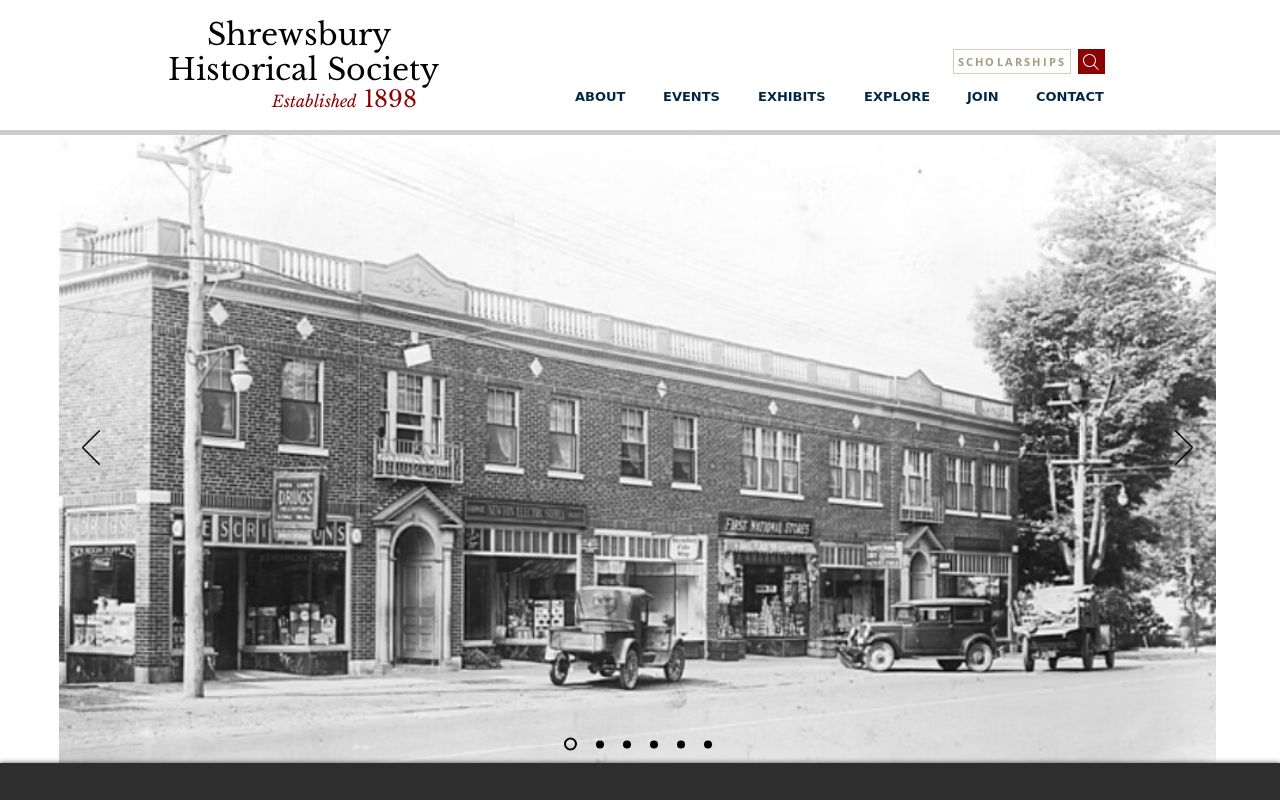
The Society is an access point for local context, while the directory page and its image remain the evidence for a particular listing.
The Cormier collection description is available from the Shrewsbury Historical Society.
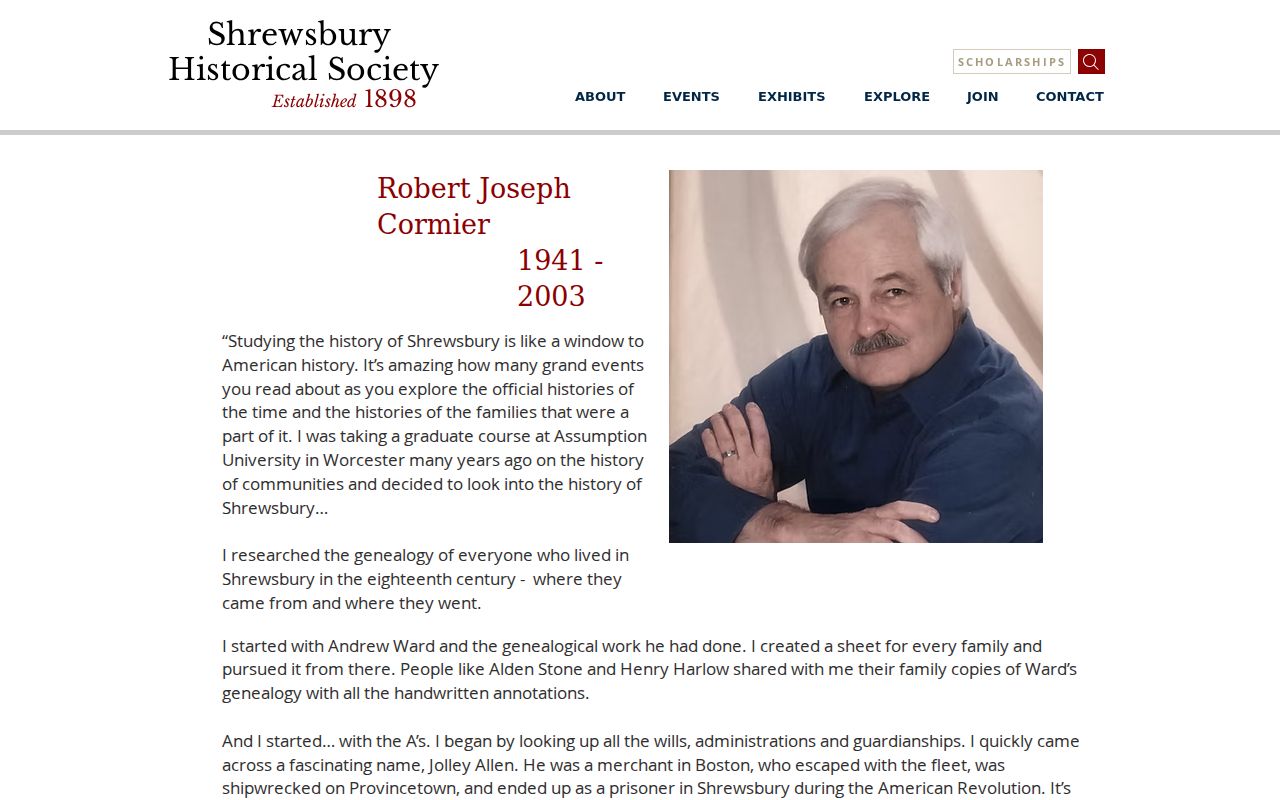
The 32-binder description can guide a Shrewsbury family search, but it does not establish that a name has been found or that the binders are digitized.
Tracing Shrewsbury City Directory Households
Use each dated Shrewsbury directory as one point in time. Begin with the name spelling and street already supported by a document or family record. Follow the person into the next available directory year, recording each address, occupation, spouse notation, and cross-reference. When the gap is large, pair the nearest directory dates with census research and the town's annual street-list or report material. Modern parcel and deed work belongs to the Shrewsbury street directory.
- Locate the person in a named volume and save the title, year, page, and image status.
- Record the address and every printed notation without turning an abbreviation into a fact not stated by the volume.
- Check the nearest available volume for a move, business change, spouse notation, or forwarding reference.
- Pair the dated listing with a census year and a Shrewsbury town report, street list, deed, or vital record that addresses the same question.
- Mark a disappearance as unresolved until another dated source supports a move, death, or omission.
A household may be absent because the compiler missed it, the person boarded elsewhere, the street changed, or the volume covered a different area. A directory alone cannot choose among those explanations.
Shrewsbury Directory Research Timeline
Local library milestones help explain why Shrewsbury historical material is distributed across several shelves and institutions. The chronology is a search aid, not a publication history for a single directory series.
- 1792: a Shrewsbury social library began with 152 volumes.
- 1872: the public library dates to this year.
- 1903: the Jubal Howe library building opened.
- 1898 onward: the Shrewsbury Historical Society preserved local objects, records, and history through its appointment route.
Use the directory year itself to date a listing. The research did not establish one uninterrupted Shrewsbury publishing sequence or a final printed edition, so a gap should remain a gap until a catalog or volume supplies the missing evidence.
Note: Cite a historical result as title, year, page or call number, archive, and image status so the search path can be reproduced.